
Learning Hub
No more intimidating financial jargon. Learn investing the way it should be taught—clear, practical, and actually useful for real people with real money.
Stocks

Your First Stock Purchase: From Ticker Symbol to Trade Confirmation
Step‑by‑step walkthrough of your first stock trade—from finding the ticker to reading a quote, choosing an order type, and understanding the trade confirmation.

Investing Day Zero: 10 Concepts to Get Before You Buy Anything
New to investing? Start here. Ten core concepts—stocks, bonds, ETFs, diversification, risk, and more—so your first trades are intentional, not random.

From Diversified Beginner to Simple Strategy: Choosing a Long‑Term Investing Style
Already have a basic stock‑bond mix? Learn three simple long‑term investing styles—indexer, core‑satellite, and target‑date—and how to pick one that fits your behavior.

How to Read a Stock or ETF Quote Without Getting Overwhelmed
Learn how to read a stock or ETF quote screen—last price, bid/ask, volume, ranges, and ETF NAV—so you can place basic trades with more clarity and less guesswork.
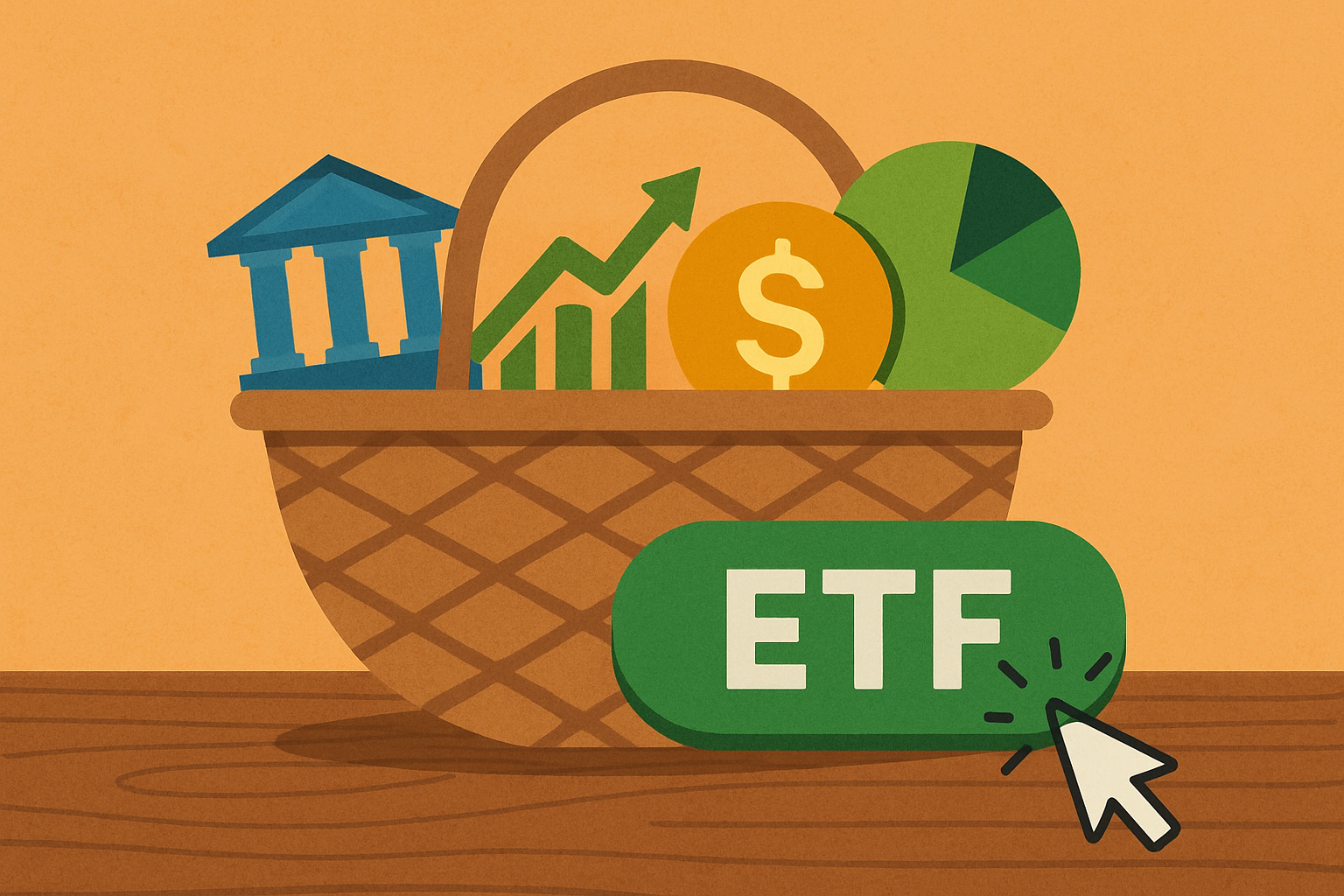
ETFs From Zero: How a Basket of Investments Becomes a One‑Click Portfolio
Learn ETF basics: what an ETF is, how it trades like a stock, what’s inside the basket, and practical questions to evaluate whether a fund fits your portfolio.
What Is a Stock, Really? Ownership, Profits, and Risk in Plain English
A stock is more than a ticker symbol. Learn how stock ownership, profits, dividends, and single‑stock risk work in plain English.

Stocks, Bonds, ETFs, and Indexes: What You’re Actually Buying
Clear, practical definitions of stocks, bonds, ETFs, and indexes—what they are, how they differ, and how they fit into a portfolio.
Your First Portfolio: From Cash To A Simple Mix Of Stocks And Bonds
New to investing? Learn how to go from all cash to a simple, diversified first portfolio using a basic mix of stock and bond ETFs, step by step.
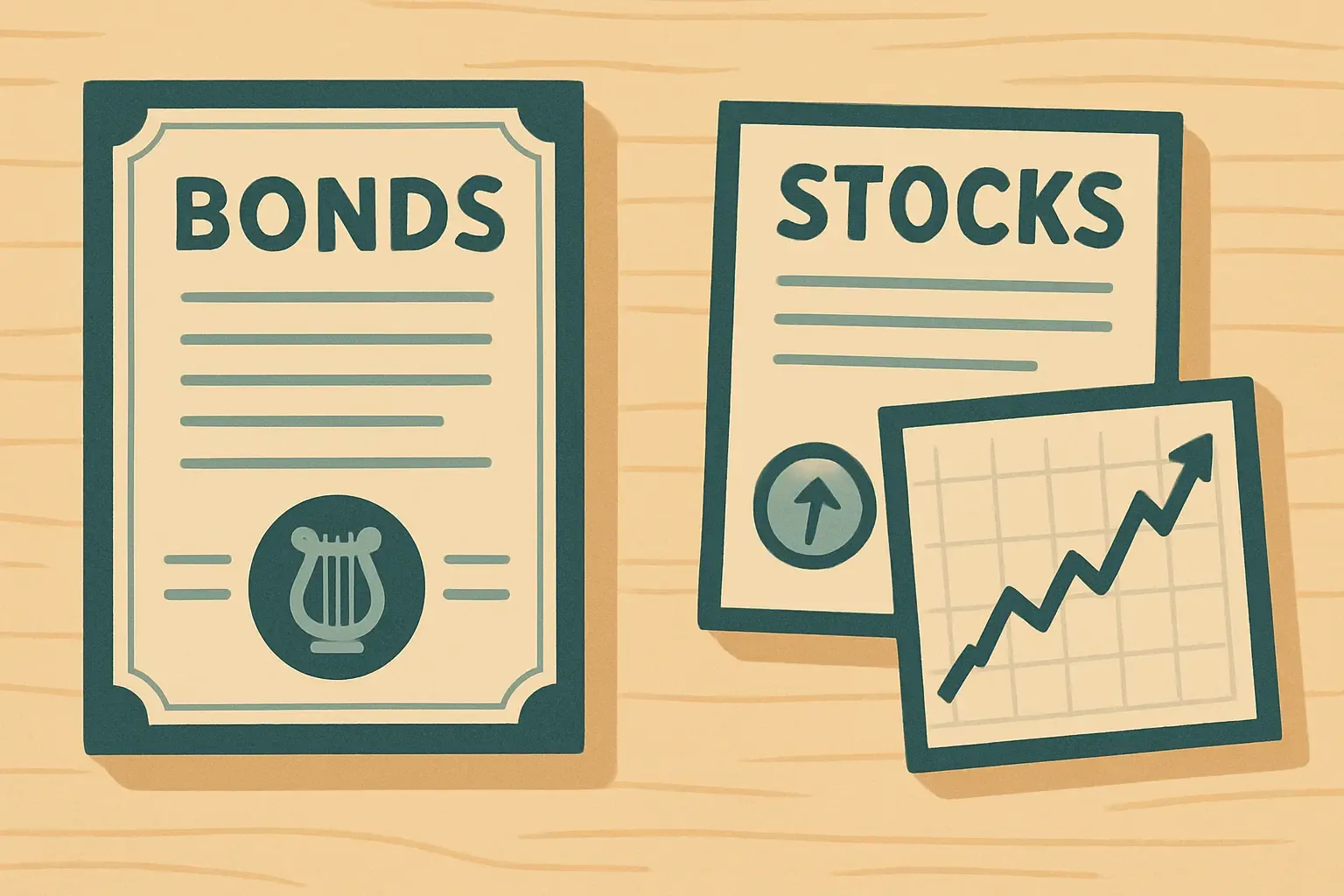
Fixed Income vs. Equity: Should You Rent Your Money or Own the Building?
Think of investing like real estate. Fixed income (bonds) is like being a landlord — you lend your money and collect steady rent checks. Equity (stocks) is like owning the whole building — you get the upside when property values soar, but you also eat the risk if things go south. Bonds delivered around 2-5% returns in 2024 while stocks returned nearly 25%, showing why you need both: bonds for the steady income, stocks for the growth that actually builds wealth over time.
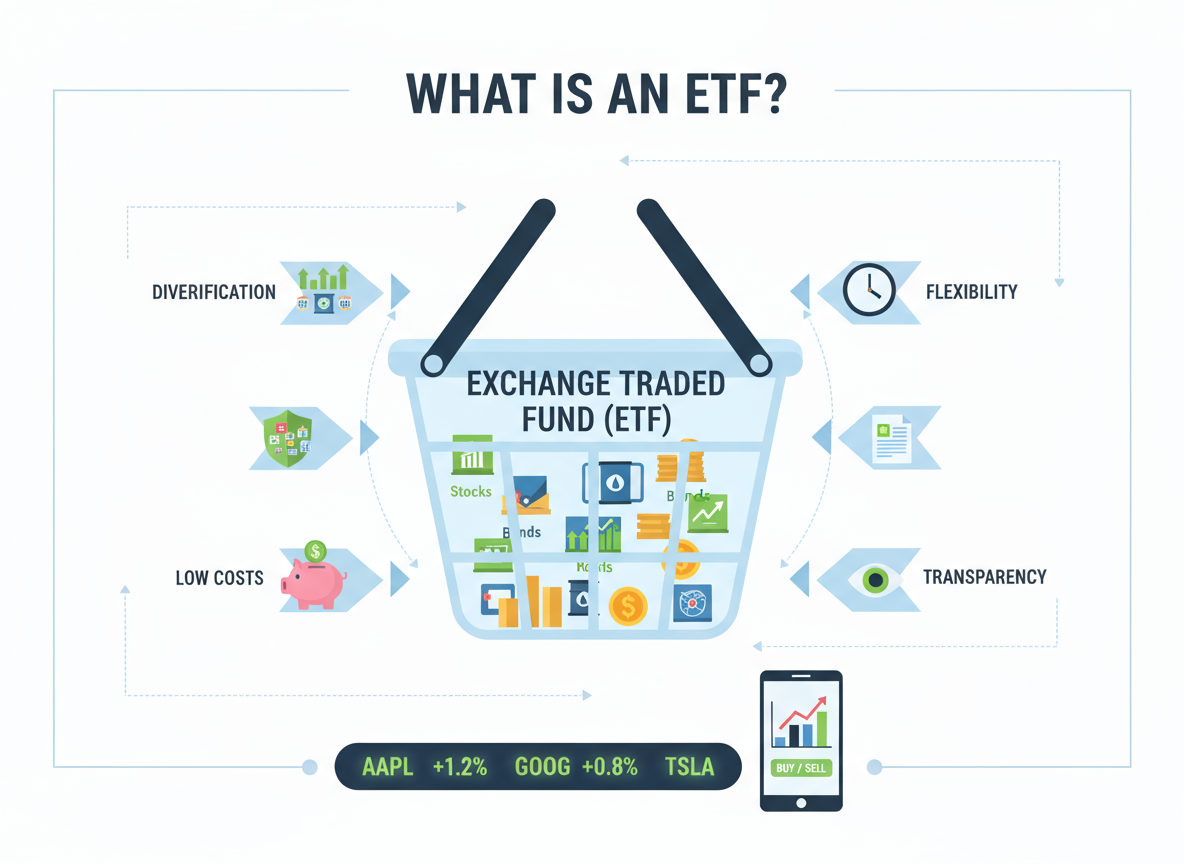
ETFs, Unlocked: What You Gotta Know
Stop gambling on single stocks like it's a lottery ticket. An ETF is basically a basket of investments—think Spotify playlist for your money. Instead of betting on one company, you instantly own a slice of hundreds or thousands. It's the easiest way to spread your risk without needing a finance degree.