
Learning Hub
No more intimidating financial jargon. Learn investing the way it should be taught—clear, practical, and actually useful for real people with real money.
Investing
From One-Fund to Many: How to Upgrade Your Portfolio (Without Making It Chaos)
Learn how to evolve from a simple one-fund portfolio to a thoughtful multi-fund setup using three-fund and core–satellite frameworks—without adding chaos.
Account Types Decoded: 401(k), IRA, and Brokerage for ETF Investors
Same ETF, different wrappers: learn how 401(k)s, IRAs, and brokerage accounts differ on taxes, rules, and flexibility so you can structure your ETF investing more clearly.

Investing Roadmap 101: From First Paycheck to First $100,000
A clear, modern roadmap that walks new investors from first paycheck to first $100,000 with simple stages, checklists, and examples—no jargon required.

Behavioral Investing Traps: How Your Brain Tries to Wreck a Good Portfolio
How loss aversion, FOMO, overconfidence, and recency bias show up in apps and feeds — and practical guardrails (rules, checklists, cooling-off periods) to help you stay aligned with long-term goals.
Tax Basics for ETF Investors: Accounts, Brackets, and Avoidable Mistakes
Learn how U.S. taxes typically affect ETF investing: accounts, capital gains, dividends, and common mistakes, explained for everyday investors.
Rebalancing 101: Keeping Your Portfolio On Track Without Overthinking It
Learn what portfolio rebalancing is, why allocations drift, and simple tax-aware methods to keep your portfolio’s risk aligned with your plan.
Dollar-Cost Averaging vs. Lump Sum: How to Put New Cash to Work
Learn practical pros, cons, and a simple framework for deploying windfalls and extra cash using lump-sum investing, dollar-cost averaging, or a hybrid approach.

Index vs. Active vs. Themed ETFs: Choosing the Right Tool for the Job
Learn how index, active, factor, sector, and themed ETFs fit into a core–satellite portfolio so you can choose each type for the right role.
Risk, Reward, and Time: How Long-Term Investing Actually Works
Learn how time horizon, risk, and reward fit together so you can connect real-life goals like a car, house, or retirement to a long-term investing framework.
Before You Invest: Build Your Emergency Fund And Debt Game Plan
Before buying your first ETF, build a basic emergency fund and a clear debt plan. Balance safety, high-interest debt, and starting to invest with a simple checklist.
Your First Portfolio: From Cash To A Simple Mix Of Stocks And Bonds
New to investing? Learn how to go from all cash to a simple, diversified first portfolio using a basic mix of stock and bond ETFs, step by step.
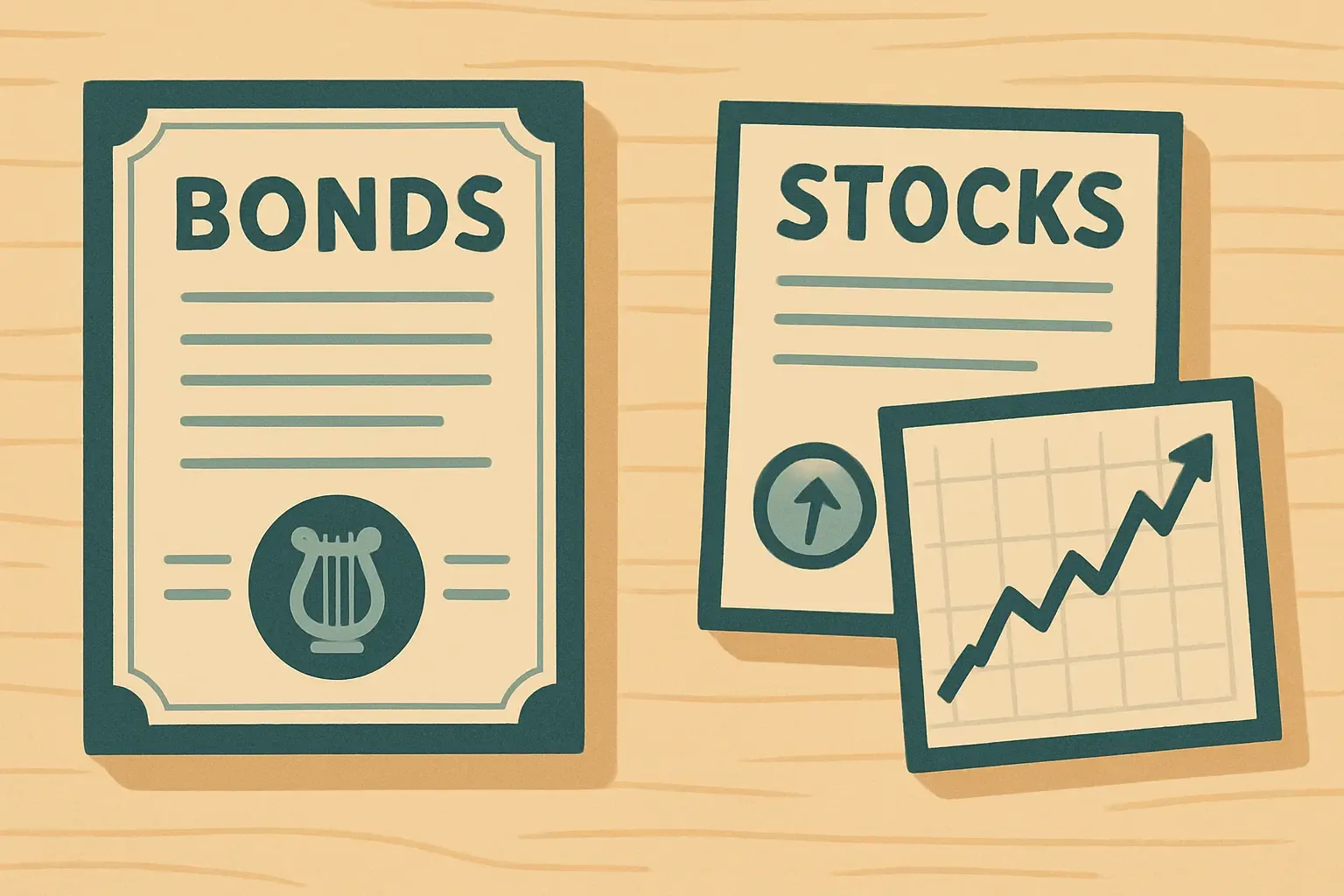
Fixed Income vs. Equity: Should You Rent Your Money or Own the Building?
Think of investing like real estate. Fixed income (bonds) is like being a landlord — you lend your money and collect steady rent checks. Equity (stocks) is like owning the whole building — you get the upside when property values soar, but you also eat the risk if things go south. Bonds delivered around 2-5% returns in 2024 while stocks returned nearly 25%, showing why you need both: bonds for the steady income, stocks for the growth that actually builds wealth over time.